


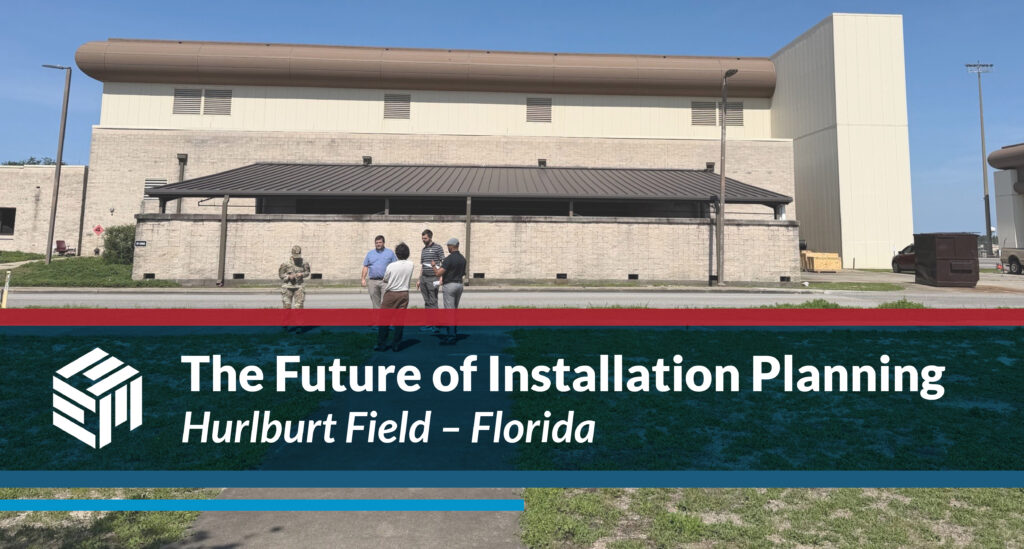
From Static Plans to Dynamic Strategy: Rethinking Installation Planning for a Changing Mission Environment
Planning for Change, Not Just the Future
For decades, installation planning has followed a familiar model: assess existing conditions, forecast future needs, develop a long-range plan, and update it periodically as requirements evolve.
That approach worked well in environments where change occurred gradually, and planning assumptions remained relevant for years.
Today’s mission environment is different.
Military installations are increasingly being asked to support evolving missions, emerging technologies, changing organizational requirements, and new operational demands — all while making infrastructure investment decisions that may shape the built environment for decades. As the pace of change accelerates, traditional static planning processes can struggle to keep pace and remain relevant.
That challenge is at the heart of a Strategic Infrastructure Plan currently underway at Hurlburt Field, home to Air Force Special Operations Command (AFSOC) in Okaloosa County, Florida.

(Entrance to Hurlburt Field, Air Force Special Operations Command)
Hurlburt Field’s existing Installation Development Plan was completed in 2015. Since then, mission requirements, organizational priorities, and operational demands have continued to evolve, significantly influencing how the installation’s infrastructure supports current and future operations.
While the existing plan provided an important foundation, it no longer fully reflects today’s mission environment. More importantly, conventional planning processes can be difficult to sustain in an environment where emerging capabilities, unforeseen contingencies, organizational changes, and evolving mission priorities require greater flexibility and responsiveness.
AFSOC’s objective is not simply to update an existing plan, but to develop a 10-year strategic infrastructure roadmap that remains relevant as missions, organizations, and technologies continue to change. With FY27 representing a critical opportunity to align infrastructure investments with future priorities, the need for a more adaptive planning approach has become increasingly important.
Moving Beyond the Traditional Plan
Through a Small Business Innovation Research (SBIR) Phase III project, Matrix Design Group is applying a proprietary GIS-based dynamic planning framework originally developed under an AFWERX SBIR Phase II effort.
his project represents the first operational deployment of the SBIR framework within an AFSOC installation planning effort and demonstrates the transition of SBIR-developed innovation from research and development into real-world application.
Rather than producing another static planning document, the framework creates a living planning environment designed to evolve alongside the installation it serves.
The approach is built around three core components:
- Stakeholder-driven data collection that captures perspectives and requirements from across the installation
- GIS as a centralized, living database that replaces static planning documents with continuously updateable spatial information
- Scenario visualization tools that enable leadership to evaluate and compare alternative planning approaches in real time
Together, these capabilities create a planning process that is more agile, transparent, and responsive to change.
Planning for Multiple Possible Futures
One of the most significant innovations is the use of branch planning.
Traditional planning efforts often result in a single preferred path forward. In contrast, this project evaluates multiple alternatives across six critical focus areas, developing and analyzing a minimum of 18 branch plans. By examining multiple pathways rather than a single solution, installation leadership gains greater flexibility to adapt as future conditions, mission requirements, organizational priorities, and technologies evolve.
The framework also incorporates scenario-based analysis and visual decision-support tools that allow leaders to compare alternatives and understand potential impacts before making long-term infrastructure decisions.
In addition to traditional infrastructure solutions, the planning process evaluates non-traditional approaches where appropriate, including alternative implementation strategies, technology insertion opportunities, and other innovative solutions that may help address future mission needs.
The result is not simply a plan — it is a dynamic decision-support environment.
The GIS platform serves as a living decision model that can be updated as missions evolve, organizations change, and new priorities emerge. Rather than requiring future planners to restart the planning process from scratch, the platform preserves data, analysis, and institutional knowledge in a continuously updateable environment. This approach has the potential to reduce future replanning costs while improving continuity and long-term decision-making.
Turning Strategy Into Action
Matrix Design Group serves as the prime contractor for the effort, leading project management, strategic planning, facilities assessments, stakeholder engagement, site development and infrastructure planning support, and integration of the GIS-based SBIR technology.
The effort brings together expertise from Matrix’s Built Environmental Solutions (BES), Planning, and Geospatial Digital Solutions (GDS) business units to deliver a multidisciplinary approach to installation planning.
Matrix has also partnered with Pond & Company on this important effort due to their deep federal planning expertise.
The project team also includes professionals with direct Hurlburt Field and AFSOC experience, providing valuable operational perspective and helping ensure planning recommendations remain aligned with mission requirements and installation realities.
Beyond developing a roadmap, the framework is designed to produce prioritized, actionable solutions tied to realistic funding and implementation pathways. By reducing overreliance on highly competitive MILCON funding and providing leadership with visual decision-support tools, the approach helps move planning concepts closer to execution.
Supporting Readiness for What Comes Next
At its core, the project is designed to support AFSOC readiness and operational resilience by helping ensure the installation’s built environment will keep pace with evolving mission requirements.
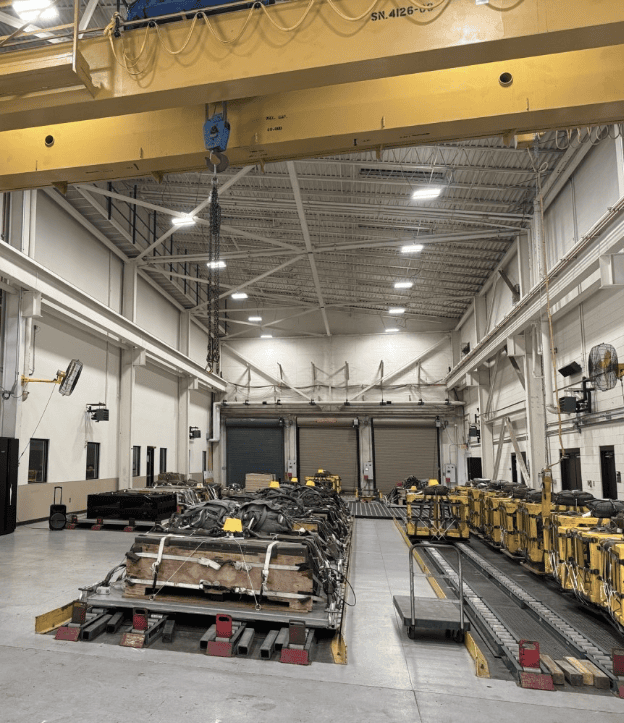
The Strategic Infrastructure Plan will provide installation leadership with a 10-year roadmap for evaluating, prioritizing, and implementing infrastructure investments aligned with command priorities. Through scenario analysis, branch planning, and data-driven decision support, leaders will be better equipped to make informed decisions that support modernization, operational effectiveness, quality of life, and long-term mission success.
As organizations across government and industry face increasing uncertainty and accelerating change, the future of planning may depend less on creating a single static plan and more on building decision-making environments that can continuously adapt.
Awarded under an SBIR Phase III contract vehicle, the Hurlburt Field Strategic Infrastructure Plan represents an important milestone in that evolution. It demonstrates how innovative planning technologies can move beyond research and into operational use, transforming infrastructure planning from a point-in-time exercise into a living strategy.
For Hurlburt Field, the outcome will be more than a planning document. It will be a dynamic, living, GIS-powered infrastructure strategy designed to support readiness, resilience, informed decision-making, and future mission success for years to come.
As missions evolve and priorities shift, the ability to adapt may become one of the most important planning capabilities of all.
For more information about SBIR, please visit: https://matrixdesigngroup.com/our-markets/federal/sbir or contact us at https://matrixdesigngroup.com/contact-us
#MatrixDesignGroup #SBIRPhaseIII #InstallationPlanning #MilitaryReadiness #BranchPlanning #HurlbertAFB